
Concrete leveling with polyurethane foam
When a slab sinks, the problem is almost always the soil under it, not the concrete itself. We fill the voids, firm up the soil, and lift your existing concrete back to level. There’s no demolition and no new concrete, and most jobs are completed within a day.
- 5.0 from 135 Google reviews
- PRO LIFT system (patent pending)
- 3-year warranty on our work
The problem is under the slab
Concrete is only as stable as the ground it sits on. Over time, a few things pull that support away:
- Erosion. Downspouts, sprinklers and heavy rain wash soil out from under the edges of slabs.
- Settling fill. Soil that was loosely packed during construction compacts over the years, and the slab follows it down.
- Voids. Water and settling leave hollow pockets under the concrete, so it cracks or tips when weight is put on it.
Once a slab drops, it creates trip hazards, steers water toward your house, and leaves gaps where more water gets in. Lifting it closes all three problems at once.
How foam leveling works
PRO LIFT is our own patent-pending lift system. It controls the injection precisely, so we can bring a slab back to grade accurately using less material.
Assess
We measure the drop, check for voids, and find what caused the settling.
Drill
We drill a few small holes through the slab where the foam needs to go.
Inject & lift
Two-part structural polyurethane foam expands under the slab. It fills voids, compacts weak soil, and lifts the concrete in controlled steps.
Patch
We patch the holes, repair any cracks, and clean up. Most jobs are completed within a day. Fresh patches and spots we’ve ground or brushed may look lighter at first; they weather and blend in over time.
Foam vs. mudjacking vs. replacing
Mudjacking pumps a heavy cement slurry under the slab. Foam does the same job with a fraction of the weight and much smaller holes.
| Foam leveling (Slab Science) | Mudjacking | Tear out & replace | |
|---|---|---|---|
| Cost | A fraction of replacement | Less than replacement | Highest |
| Time | Usually one day; sealed cracks are ready for cars in about 24 hours | Plus time for the slurry to cure | Days to weeks, plus curing |
| Holes | Small, patched to blend | Larger | — |
| Weight added to the soil | Very light | Heavy | Heavy |
| Mess | Minimal | Wet slurry | Demolition, heavy equipment, landscaping repair |
Concrete pushed up by tree roots
Roots can heave a slab up and leave a trip hazard. The old fix was to tear out the concrete, cut the roots and pour new, which often hurts the tree. We have two ways to fix it without new concrete, and we’ll tell you which one fits during the free assessment.
Root bridging (the tree stays healthy)
- We raise the heaved slab with an above-ground jack system until it sits just above the roots.
- Then we lift the slabs next to it to match, so the walk is smooth again, keeping each slab’s slope within ADA limits.
- Foam fills the space underneath and forms a barrier between the roots and the slab. With less moisture to go after, the roots tend to be less aggressive.
- We grind and seal the joints and cracks with a flexible sealant dusted with sand, and fill the injection holes.
We can’t promise the roots will never move the slab again. If they do, we can make touch-up adjustments for a small charge. For some kinds of trees, a tree growth regulator is worth considering too.
Root removal
- We carefully lift the slab to expose the roots, then remove or shave them and prepare the ground.
- We lower the slab back into place and line it up.
- Foam fills any voids and firms up the ground underneath until the slab is at the right height.
- In rare cases we shave down a remaining high edge, then fill the injection holes.
Removing or shaving roots can hurt the tree, and new roots can push the slab up again.
Leveling by area
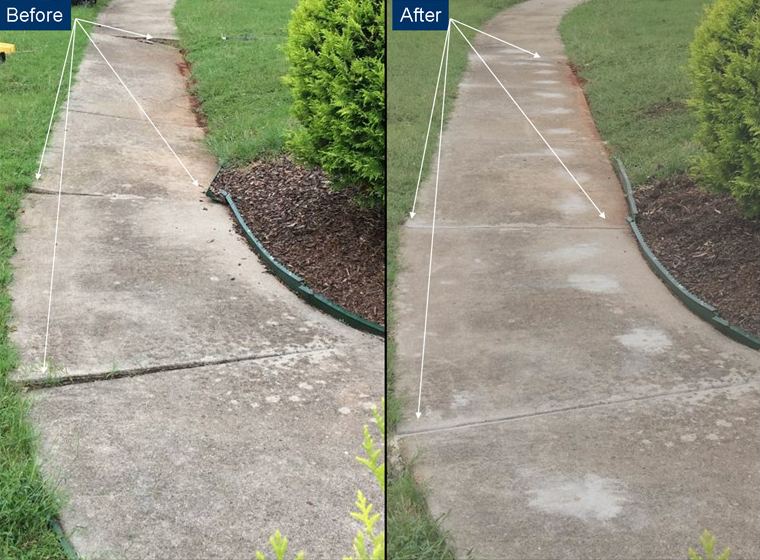
Driveways
Sunken sections, gaps and drops at the garage.
Learn more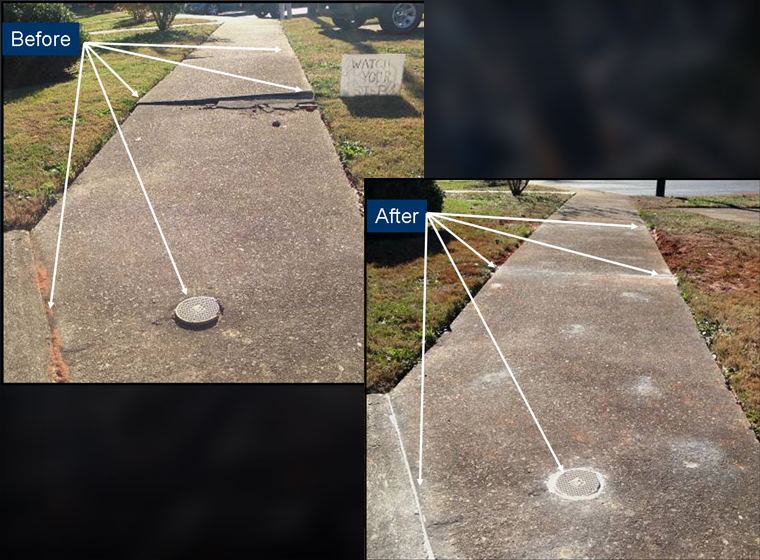
Sidewalks & walkways
Trip hazards and tipped slabs.
Learn more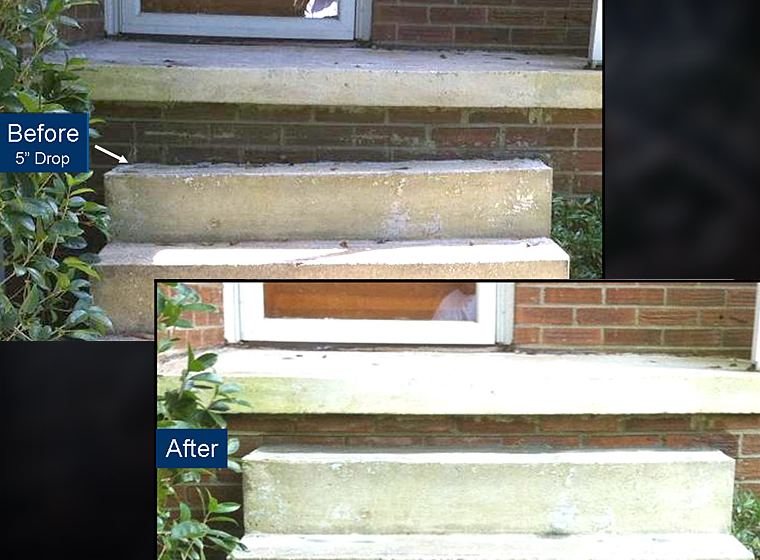
Porches & steps
Sinking steps and stoops pulling away from the house.
Learn more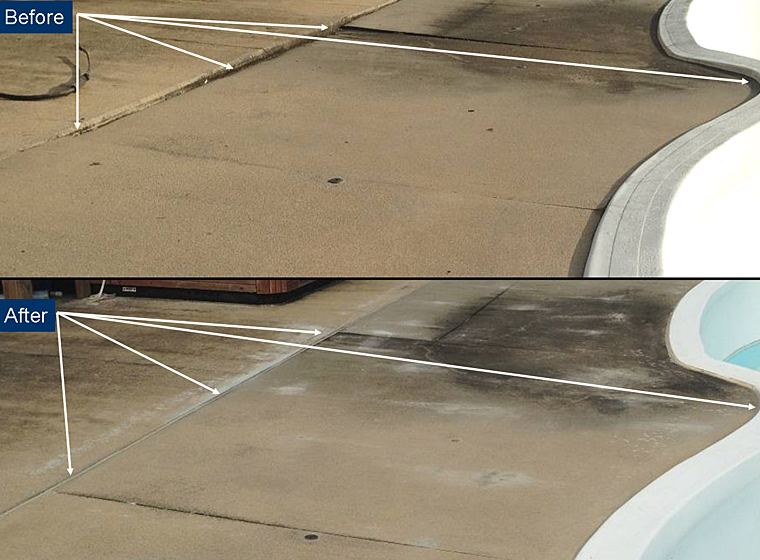
Pool decks
Settled slabs, coping gaps and cracks.
Learn more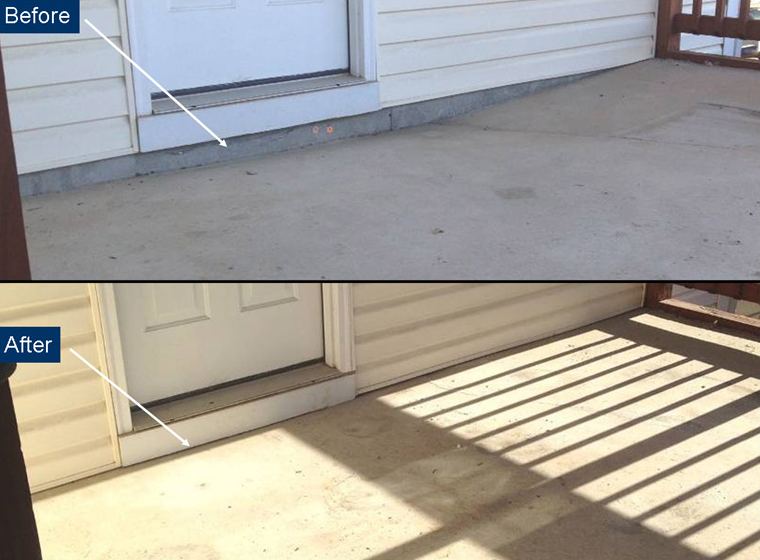
Patios
Sunken corners, voids and poor drainage.
Learn more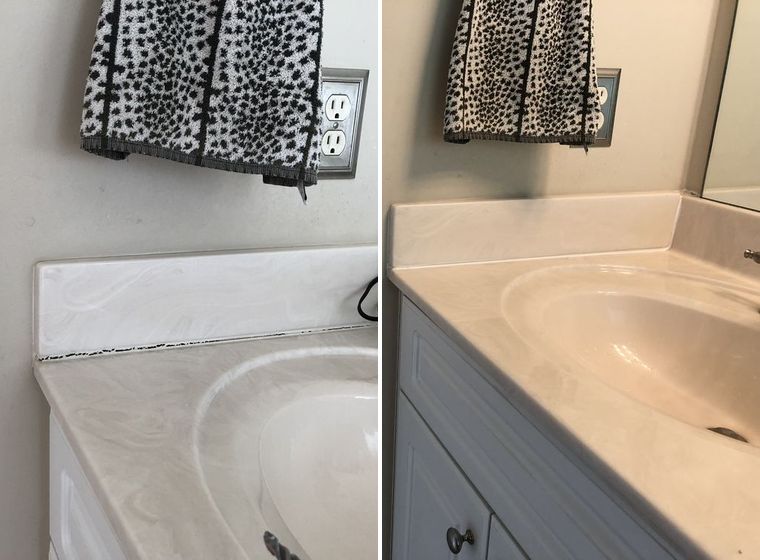
Interior slabs
Settled floors in slab-built homes, when conditions allow.
Learn more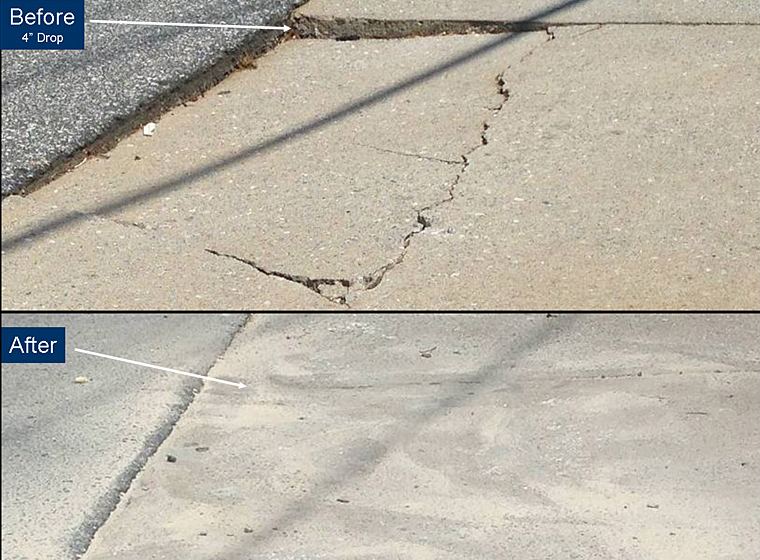
Crack repair
Cracks and joints ground out, sealed and sand-finished.
Learn more
Commercial & HOA
Sidewalk trip hazards on larger properties.
Learn more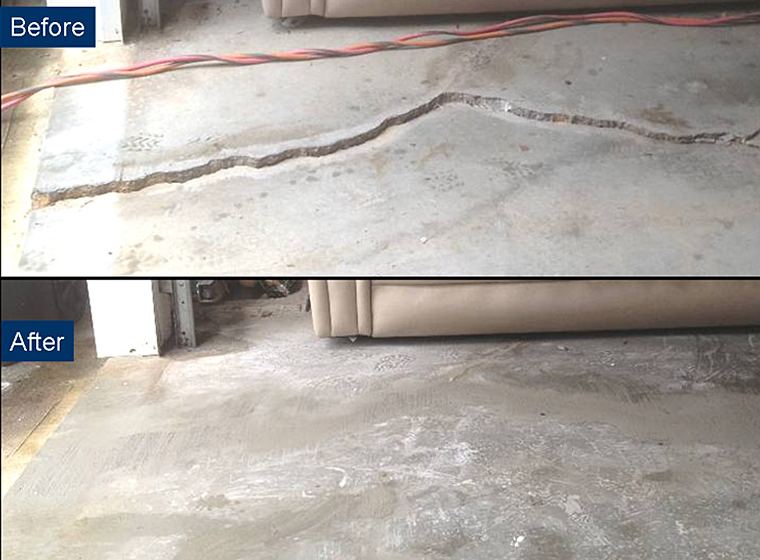
Garage floors
Sunken sections, uneven joints and cracks.
Learn moreFrom customers who’ve had it done
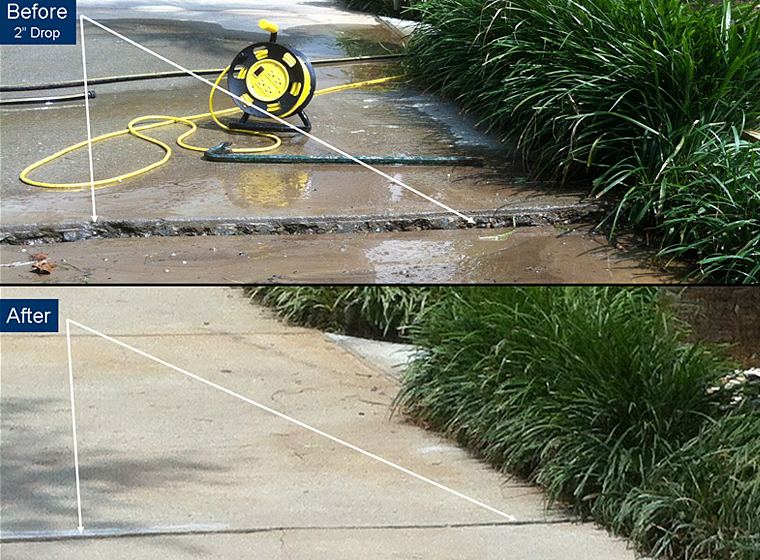
“Side walk had sunken about 2″ and was lifted to its original position. Work crew was on time, professional and did a very good job. Job site was left clean.”
“Very professional. Truly was a scientific approach for a perfectly even sidewalk!”
“Great company, Great Service and Great value!! Driveway is level, repaired and looks Great.… Important note much cheaper than the “BIG” name companies that I got quotes from”
Concrete leveling FAQ
How long does foam leveling last?
The foam fills the voids that caused the settling and firms up the soil under the slab, so the fix addresses the cause, not just the symptom. Our work comes with a 3-year warranty.
Can you fix concrete that tree roots have pushed up or cracked?
Often, yes. We can “bridge” the roots, raising the slabs just above them so the tree isn’t harmed, or carefully remove or shave the roots and set the slab back down. We’ll look at it and tell you which makes sense. We can’t promise roots won’t move the slab again, but if they do, touch-ups are a small charge. See how tree root repairs work.
Is concrete leveling the same as concrete lifting or slabjacking?
Yes, they’re different names for the same job: raising a sunken slab back into place. You’ll also hear concrete raising, mudjacking and polyjacking. Mudjacking (also called slabjacking) pumps a heavy cement slurry under the slab. We use polyurethane foam, which is much lighter and needs smaller holes.
Can every sunken slab be lifted?
Most can. A slab that’s badly broken into many small pieces may be better off replaced. We’ll tell you honestly during the free assessment.
Will the concrete crack when you lift it?
We lift in small, controlled steps to keep the slab in one piece. Existing cracks can be sealed as part of the same visit.
Do I need to be home?
Not always. Plenty of customers are at work while we’re there. We’ll confirm what we need when we schedule the job.